
Quick Answer:
Picking the right attribution tool starts with your CRM and your sales cycle. Salesforce teams with long, complex cycles should evaluate HockeyStack or Dreamdata first. HubSpot-native teams get the cleanest setup with Heeet. B2B companies where phone calls close deals need Ruler Analytics. Paid-ad-heavy teams spending $20K+ monthly should look at Cometly for server-side accuracy. If you are evaluating all nine, the comparison table in this guide gets you to a shortlist in under five minutes.
TL;DR
1. HockeyStack ~$2,200/month. AI-powered GTM execution for complex B2B cycles. Best for dedicated RevOps teams with $25K+ annual budget.
2. Dreamdata $0 free / $750+/month. Account-level B2B attribution. Best for $5M+ ARR teams with 6+ month sales cycles.
3. Factors.ai $0 free / $399+/month. ABM and multi-touch attribution with offline event tracking. Fastest onboarding at 30 minutes.
4. Cometly Custom pricing. Server-side tracking with AI ad recommendations. Best for teams spending $20K+ monthly on ads.
5. Adobe Marketo Measure Contact for pricing. Enterprise B2B attribution. Requires Salesforce or Dynamics.
6. Heeet ~$1,490/month. Native CRM-embedded attribution. Lives inside Salesforce or HubSpot.
7. Ruler Analytics From $400/month. Call tracking plus closed-loop attribution. Best when phone calls drive conversions.
8. CaliberMind Contact for pricing. Data warehouse attribution. Requires SQL and data engineering resources.
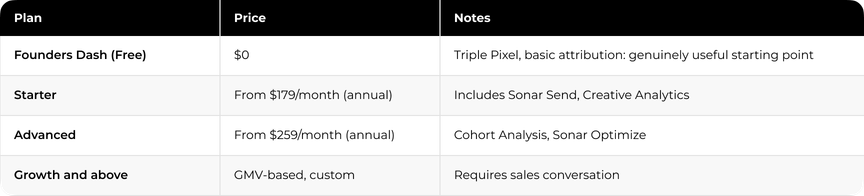
9. Triple Whale $0 free / $179+/month. Ecommerce DTC attribution. Not for B2B SaaS.
Not sure which attribution tool fits your stack? Darwin maps your data flow and recommends the right fit for your CRM and sales cycle.
Every attribution vendor promises powerful insights and seamless integrations. What they leave out: the tool is only as accurate as the data infrastructure feeding it. Before picking a platform, the real question is whether your CRM data, UTM governance, and conversion tracking can actually support the model you want to run.
This guide covers the best marketing attribution tools for mid-market SaaS teams with verified pricing, real implementation timelines, G2 ratings, and honest trade-offs.
When Does a Mid-Market SaaS Team Need an Attribution Tool?
A dedicated attribution platform is justified when deal complexity, channel volume, and revenue accountability exceed what your CRM native reporting can handle.
You likely need attribution software if three or more of these apply:
• Sales cycles exceed 90 days. According to Dreamdata research across 3.5M B2B journeys, the average B2B buyer journey runs 272 days, making last-click attribution dangerously incomplete. Multi-touch models credit every interaction so you see which early-stage touchpoints actually drive deals.
• ACV exceeds $10K with hybrid go-to-market motions. When deals blend self-serve and sales-led approaches, tracking which channels feed pipeline and which close deals becomes critical.
• Buying committees involve six to ten stakeholders. Multiple decision-makers mean multiple touchpoints across different channels and timeframes. Account-based attribution connects the full journey.
• You operate five or more marketing channels. B2B SaaS teams typically see seven to 15 touchpoints per deal. Paid search, social, content, email, events, and organic all play a role.
• Your team measures revenue to closed ARR, not MQLs. If leadership cares about pipeline influence and closed revenue, you need a tool that traces deals from first touch through contract signature.
• Your team handles 300 or more conversions monthly. Data-driven attribution models require sufficient volume to calculate accurate credit distribution.
When you do not need a dedicated tool:
• Sales cycles under 30 days with ACV below $5K: last-click reporting from ad platforms gives enough signal.
• One dominant channel drives over 70% of revenue: you already know where customers come from.
• Fewer than 100 conversions per month: data-driven models need volume to be statistically reliable.
• Basic funnel with no sales handoff: standard analytics covers your needs.
"The fundamental problem here is not lack of data or tracking, but the problem is all this data does not really connect." – Lars Gronnegaard, COO and Co-Founder, Dreamdata
What Criteria Should Mid-Market SaaS Teams Use to Choose an Attribution Tool?
The right tool is determined by five factors: CRM compatibility, sales cycle length, attribution complexity, internal ownership capacity, and budget. Score your fit across each before booking demos.
Which CRM Does Your Team Run?
Your attribution tool must integrate natively with your primary CRM. Sync lag and manual exports break attribution data at the source. If you are on Salesforce, look for AppExchange-certified tools. If you use HubSpot, native options simplify onboarding significantly.
How Long Is Your Average Sales Cycle?
Short cycles under 60 days work well with simpler tools like Ruler Analytics or HubSpot native attribution. Long cycles beyond 90 days demand multi-touch capability. HockeyStack and Dreamdata are built for this range.
How Many Stakeholders Are Involved in a Typical Deal?
Teams with buying committees of six to ten stakeholders need account-based attribution that maps the full group journey. Simpler linear models work for deals with one or two decision-makers.
Who on Your Team Will Own the Attribution Setup?
No-code platforms require minimal engineering support and launch in days. Tools like HockeyStack and CaliberMind involve steeper learning curves and may need a dedicated RevOps or data engineering resource to operationalize.
What Budget Is Available for Attribution?
Mid-market SaaS invests $400 to $2,000 per month in attribution software. Factor in setup labor. A $400/month tool requiring six weeks of engineering setup may cost more in total than a $1,200/month platform that launches in two weeks.
Evaluating attribution tools? Darwin audits your CRM, data layer, and sales cycle to tell you which one fits.
Which Are the Best Marketing Attribution Tools for Mid-Market SaaS Teams in 2026?
The nine tools below differ in CRM integration, attribution logic, implementation complexity, and price. Each section covers what the tool does, what it costs, who it fits, and where it falls short.
1. HockeyStack

HockeyStack is best for mid-market and enterprise B2B teams with complex, multi-stakeholder sales cycles, a dedicated RevOps resource, and a $25K+ annual attribution budget.
What Does HockeyStack Do?
HockeyStack repositioned itself as a GTM execution platform powered by Revenue Agents. These agents run autonomously across prospecting, new business, and expansion, following the Blueprint: a machine learning model that reverse-engineers your winning sales process from historical CRM and engagement data. 90% of customers report seeing value within the first 45 days, per vendor-reported data.
What Are HockeyStack Key Capabilities?
Architecture centers on three components. ClickHouse powers real-time analytics with sub-second query latency. Atlas automatically cleans messy CRM data and reconciles conflicts across Salesforce custom objects. Odin functions as the AI analyst using multi-agent orchestration. Integrates with Salesforce, HubSpot, Gong, Zoom, and major ad platforms. SOC 2 Type II certified.
How Much Does HockeyStack Cost?

Pricing sourced from third-party buyer data and Vendr benchmarks. Annual contracts standard. No self-serve signup.
Who Is HockeyStack Best For?
Teams with deal sizes above $15,000, at least 50 employees, dedicated RevOps resource. Skip it if you are early-stage, have four-figure deals, or need transparent pricing upfront.
What Are the Pros and Cons of HockeyStack?
4.6/5 on G2 from 77 reviews, with 80% giving five stars. Users praise analytics depth and post-onboarding ease of use. The learning curve is steep: 11 reviewers called it difficult. No API for raw data export currently.
2. Dreamdata

Dreamdata is best for mid-market B2B companies above $5M ARR running multi-channel campaigns with sales cycles of six months or more and a dedicated marketing ops resource.
What Does Dreamdata Do?
Dreamdata maps the complete B2B customer experience from anonymous website visitor to closed revenue at the account level, not the individual lead level. The platform has raised $67M in total funding, connects to 41 integrations, and identifies up to 80% of companies visiting your site through IP-to-company resolution. Advanced plans give you warehouse access through BigQuery and Snowflake.
What Are Dreamdata Key Capabilities?
Full-funnel attribution across paid search, social, organic, and direct channels. Ten or more models out of the box. AI-powered intent signals surface high-intent accounts. Audience Hub builds segments and syncs them to ad platforms. One-click conversion syncs push pipeline data to Google, Meta, and LinkedIn for optimized bidding.
How Much Does Dreamdata Cost?

Annual contracts standard. Small teams (under 5,000 CRM accounts) typically pay $15K to $28K a year per Docket pricing research.
Who Is Dreamdata Best For?
Mid-market B2B with structured CRM data and a need to prove which campaigns drive pipeline. Skip it if you are under $5M ARR or lack a marketing ops owner.
What Are the Pros and Cons of Dreamdata?
4.7/5 from 245 G2 reviews. Users praise account journey visualization and CRM sync. Setup requires 40 to 60 hours of marketing ops time, roughly $3K to $9K in labor before reliable data appears per third-party estimates. Attribution breaks down when UTM tracking or CRM hygiene is poor.
3. Factors.ai
Factors.ai is best for mid-market B2B SaaS teams that need multi-touch attribution, account identification, and offline event tracking with the lowest barrier to entry on this list.
What Does Factors.ai Do?
Factors.ai is an AI-powered ABM and attribution platform for B2B go-to-market teams. It maps experiences at both user and account levels and tracks offline interactions like webinars, field events, and SDR calls. Factors identifies up to 75% of anonymous companies visiting your site, compared to an industry average of around 40% per vendor documentation.
What Are Factors.ai Key Capabilities?
Multi-touch attribution covers paid, organic, email, outbound, LinkedIn, G2 intent, and events in one account timeline. Integrates with HubSpot, Salesforce, Marketo, 6sense, Segment, Rudderstack, Google Ads, LinkedIn, and Facebook Ads. Onboarding: 30 minutes. Data flows within 48 hours.
How Much Does Factors.ai Cost?
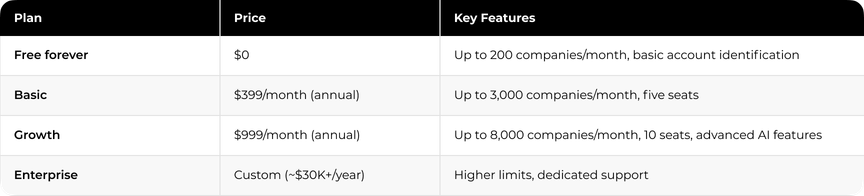
LinkedIn AdPilot ($1,000/month) and Interest Groups ($750/month) are paid add-ons per Docket pricing data.
Who Is Factors.ai Best For?
Mid-market B2B SaaS teams that need to attribute pipeline to specific campaigns, channels, or content assets during long sales cycles. Skip it if you are early-stage with a simple single-channel funnel.
What Are the Pros and Cons of Factors.ai?
4.5/5 from 179 G2 reviews. Free plan is a genuine product. Customer support earns high marks. Integration setup requires no coding. Add-on costs push effective spend well above the base plan price. Dashboard sharing has limitations.
4. Cometly

Cometly is best for growth-focused marketing teams spending $20,000 or more monthly on paid ads and needing server-side attribution that bypasses iOS and ad blocker limitations.
What Does Cometly Do?
Cometly combines server-side tracking with AI-powered budget recommendations. It captures a higher share of conversions than cookie-based tools by bypassing browser limitations. The AI Ads Manager surfaces specific actions: pause this ad set, shift 20% budget to Campaign A, built from the complete customer journey.
What Are Cometly Key Capabilities?
Unique tracking token per visitor links sessions across domains and devices. Ad blockers do not affect server-side data collection. Ten or more multi-touch attribution models. Conversion sync feeds enriched events back to Meta, Google, TikTok, and LinkedIn via Conversion APIs. Integrations include Stripe, HubSpot, Salesforce, and 30 or more platforms per Cometly documentation.
How Much Does Cometly Cost?

Custom pricing based on ad spend volume. No self-serve pricing page.
Who Is Cometly Best For?
Growth-focused teams with $20,000+ monthly ad spend running on multiple paid platforms. Skip it if you are pre-revenue or running organic-only strategies.
What Are the Pros and Cons of Cometly?
Users on Trustpilot report reliable data within days of setup. No developers required. The limitation: no public pricing. You go through demos before seeing costs.
Your attribution tool is only as reliable as the data feeding it. Darwin audits your tracking setup and connects your platform to a clean data foundation.
5. Adobe Marketo Measure

Adobe Marketo Measure is best for enterprise B2B teams running Salesforce or Microsoft Dynamics as their single CRM, with clean data foundations and the technical resources for complex implementation.
What Does Adobe Marketo Measure Do?
Adobe Marketo Measure provides enterprise-grade B2B attribution across the full buyer journey. The standard product integrates with Salesforce or Dynamics only. Marketo Measure Ultimate connects to nearly any data source through the Adobe Experience Platform connector catalog, including multiple CRMs and third-party webinar data.
What Are Adobe Marketo Measure Key Capabilities?
Every-touch attribution logs first touch, lead creation, opportunity creation, and closed-won events. Pre-built models include U-shaped, W-shaped, Full Path, and single-touch options running simultaneously. Full Path assigns 22.5% credit to each of four milestone touchpoints. Integrates with Google Ads, LinkedIn, Facebook, and Bing.
How Much Does Adobe Marketo Measure Cost?
Pricing is available upon request only. Enterprise sales conversations are required before seeing quotes.
Who Is Adobe Marketo Measure Best For?
Enterprise B2B teams on Salesforce or Dynamics with consistent UTM governance and Marketo Engage already in place. Skip it if you use different CRM platforms or lack dedicated implementation resources.
What Are the Pros and Cons of Adobe Marketo Measure?
4.0/5 on G2 from 253 reviews. Delivers credible revenue attribution once implemented. Pre-built dashboards provide visibility across marketing, sales, and paid media. Setup is complex and overwhelming for smaller teams without enterprise-level technical support.
6. Heeet

Heeet is best for mid-market B2B teams already on Salesforce or HubSpot who need attribution without adding a separate tool to their stack.
What Does Heeet Do?
Heeet is the only attribution tool on this list that lives entirely inside your CRM. Attribution data sits next to your deals and contacts in Salesforce or HubSpot: no separate dashboard to maintain. Cookieless tracking means ad blockers cannot break it. GDPR compliance is built in from day one. Implementation wraps in two weeks for most teams. Some go live in under 90 minutes per vendor documentation.
What Are Heeet Key Capabilities?
Connects Google Ads, Facebook, LinkedIn, and Bing with your CRM on autopilot. Multi-touch models include first-touch, last-touch, linear, U-shaped, W-shaped, and custom. Measures revenue impact across paid search, organic, webinars, email nurture, and offline events. Content influence tracking shows which assets move leads through the funnel.
How Much Does Heeet Cost?

Flat pricing sourced from Heeet alternatives page. No tiers based on page visits or connector limits.
Who Is Heeet Best For?
Mid-market B2B on Salesforce or HubSpot who need attribution without adding another platform. Skip it if you are not on one of these two CRMs: there is no workaround.
What Are the Pros and Cons of Heeet?
Per Heeet case study data, Ringover saw a 24% increase in attribution accuracy and 14% improvement in Google Ads ROAS after implementing Heeet. Fast implementation and strong support quality. The limitation: CRM dependency. Switch platforms and you rebuild attribution from scratch.
7. Ruler Analytics

Ruler Analytics is best for B2B service companies where phone calls, forms, and live chats all drive revenue and attribution needs to trace those conversions back to closed deals.
What Does Ruler Analytics Do?
Ruler Analytics built its platform around one gap that most attribution tools ignore: phone calls. The software tracks calls alongside forms and live chats, connecting each conversion back through the complete visitor journey to show which campaigns, keywords, and content actually drove closed revenue. No separate call tracking subscription needed.
What Are Ruler Analytics Key Capabilities?
Captures form submissions, phone calls using dynamic number insertion, and live chat conversations from Drift, Intercom, and Olark. Multi-touch models include first-click, last-click, linear, time-decay, and position-based. Native integrations with Salesforce, HubSpot, Dynamics 365, Google Analytics, Google Ads, Facebook Ads, and LinkedIn Ads.
How Much Does Ruler Analytics Cost?
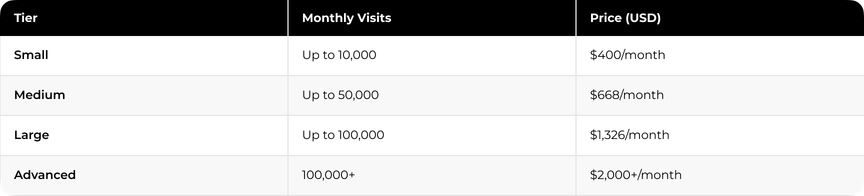
Pricing verified at ruleranalytics.com/pricing. No long-term contracts required.
Who Is Ruler Analytics Best For?
B2B service companies where calls drive conversions and proving marketing ROI matters more than vanity metrics.
What Are the Pros and Cons of Ruler Analytics?
Simple setup compared to enterprise alternatives. Accurate tracking and consultative customer success earn consistent high marks across reviews. The limitation: attribution only. You will need separate tools for automation and content distribution.
8. CaliberMind

CaliberMind is best for mid-market and enterprise B2B teams with existing data engineering resources who need full control over their attribution logic with everything unified in BigQuery.
What Does CaliberMind Do?
Most attribution software gives you dashboards. CaliberMind gives you a data warehouse. Marketing and sales data unify into BigQuery, which requires SQL knowledge and data engineering capacity. CaliberMind serves Fortune 500 companies that want full control over attribution logic, not a managed dashboard.
What Are CaliberMind Key Capabilities?
170 or more data source connections per vendor documentation. Handles complex Salesforce custom objects. Multi-touch attribution with account-based insights, buyer journey analysis, and revenue attribution. Added Marketing Mix Modeling connecting tactical attribution with strategic budget planning. SOC 2 compliant. Reverse ETL pushes enriched data back into your CRM.
How Much Does CaliberMind Cost?
No per-user fees. Pricing scales with data complexity. Contact CaliberMind directly for quotes.
Who Is CaliberMind Best For?
Enterprise teams with data engineering resources. Implementation takes two weeks with white-glove managed services. Skip it if you lack BigQuery expertise or want plug-and-play.
What Are the Pros and Cons of CaliberMind?
Users on TrustRadius praise data depth and managed services quality. The limitation: technical overhead requires dedicated data engineering. Not suitable for teams without SQL experience.
"Attribution must be used to objectively inform strategic decisions, not to prove or justify ROI." – Chris Walker, CEO, Passetto | Chairman, Refine Labs
9. Triple Whale (Not for B2B SaaS)

Triple Whale is best for Shopify-based DTC brands spending $5,000 or more monthly on Meta and Google. It is included here specifically so B2B SaaS teams can rule it out with confidence.
What Does Triple Whale Do?
Triple Whale is built exclusively for Shopify stores. Over 60,000 ecommerce brands use it, including Pressed Juicery, OUAI, and True Classic. It started as a founder dashboard in 2021 and evolved into a full analytics suite after iOS 14 made cookie-based attribution unreliable. The platform processes over nine billion events daily.
What Are Triple Whale Key Capabilities?
Multiple attribution models including the proprietary Total Impact model that blends click data with post-purchase survey responses. The Triple Pixel handles cross-device tracking without third-party cookies. Moby AI analyzes performance anomalies and recommends budget reallocations.
How Much Does Triple Whale Cost?
Pricing scales with annual Gross Merchandise Value. Plans verified at triplewhale.com/pricing, March 2026:
Who Is Triple Whale Best For?
Shopify stores spending $5,000 or more monthly on paid ads. It is not applicable for pure B2B SaaS: the Shopify dependency makes it a non-starter outside ecommerce.
What Are the Pros and Cons of Triple Whale?
Used by over 60,000 brands. StatusGator data shows 168 tracked outages across platform components since February 2024, with the Attribution module logging 140+. Stability has improved in 2025 and 2026, with incidents typically resolving within 73 minutes per IsDown tracking. Shopify-only focus eliminates it from consideration for B2B SaaS teams regardless of reliability.
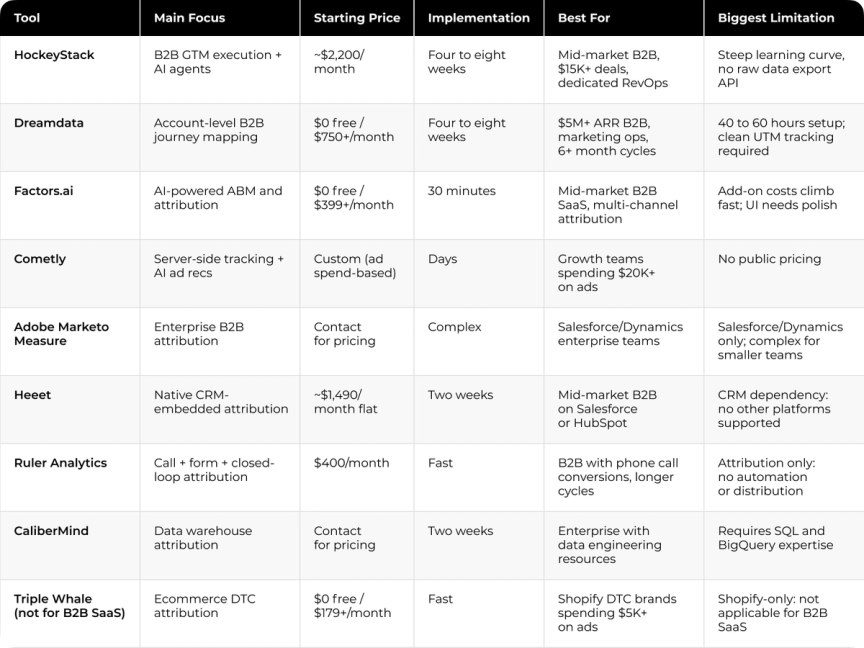
How Do the 9 Marketing Attribution Tools Compare?
The table below summarizes starting price, implementation time, best fit, and biggest limitation so you can shortlist two tools and move to a proof-of-concept.
How to Shortlist and Validate Your Attribution Tool
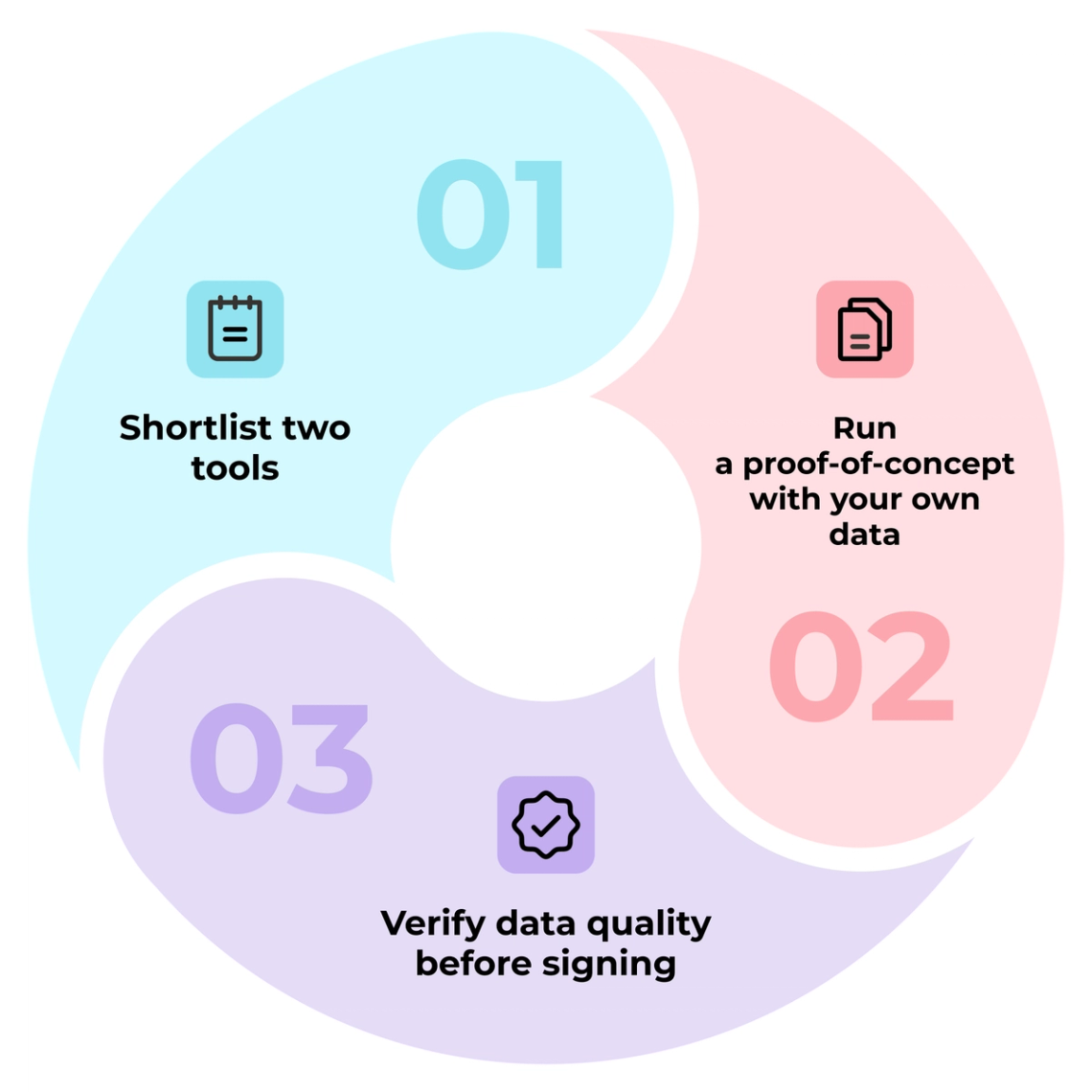
Once you identify two tools that fit your CRM and sales cycle, validate them before committing to an annual contract.
Step 1: Shortlist two tools. Use the five criteria above to score your fit. Do not evaluate more than two tools in parallel: it slows decisions without improving them.
Step 2: Run a proof-of-concept with your own data. Ask vendors for a POC using your actual CRM data, not a demo environment. Backtest attribution models against historical closed deals to see how well the model aligns with what you know closed. If numbers do not make sense against known outcomes, that is a red flag before you sign anything.
Step 3: Verify data quality before signing. Check that UTM tracking is consistent across paid channels, CRM fields are mapped correctly, and conversion events fire in the right sequence. Attribution tools surface broken infrastructure. They do not fix it.
How Darwin Helps Mid-Market SaaS Teams Get Attribution Right
Darwin does not replace attribution tools. Darwin fixes the tracking layer, CRM configuration, GA4 setup, warehouse connection, and reporting structure so the tool you pick produces reliable numbers.
Darwin works with B2B and enterprise teams to audit the measurement infrastructure before any platform goes live. The process covers: verifying event tracking and channel attribution logic, configuring CRM and marketing automation fields to match attribution model requirements, setting up GA4 and warehouse connections, designing the paid media data pipeline that connects ad platforms to your CRM, and aligning KPI definitions with your operating model.
When ABC Fitness Solutions approached Darwin with critical Google Analytics configuration issues, GA tracking was unreliable and the team had no consistent view of customer behavior or campaign performance. Darwin resolved the tracking gaps, improved analytics reliability, integrated third-party tools, and optimized site performance. The results: a 24% lift in user engagement, a 12% increase in sales, a 15% improvement in campaign effectiveness, 8% faster load times, and a 7% improvement in site performance within six months.
The pattern repeats: teams spend weeks evaluating attribution platforms and months configuring them, then discover the underlying data was broken before they started. Darwin resolves that before the platform is chosen. When the data layer is clean, analytics becomes a system that sustains operating decisions rather than a reporting layer that requires constant reconciliation.
Ready to stop guessing which campaigns drive revenue? Darwin builds the measurement infrastructure that makes attribution data reliable.
FAQs
Q1. What makes marketing attribution tools essential for mid-market SaaS companies?
Attribution tools connect every customer touchpoint from first click to closed deal. Without them, mid-market SaaS teams allocate budget based on whichever channel claims credit in its own dashboard, which is almost always more than one channel claiming the same revenue. A proper attribution model gives marketing and sales a single, shared view of what actually drives pipeline.
Q2. How does server-side tracking differ from traditional cookie-based attribution?
Server-side tracking captures conversion data directly on the server rather than relying on browser cookies, bypassing limitations created by ad blockers, privacy features, and iOS restrictions. This approach captures a significantly higher share of conversions and produces more reliable data for AI-based budget recommendations.
Q3. Why is account-level attribution more important than individual lead tracking for B2B companies?
B2B purchases typically involve buying committees of six to 12 people who research independently before anyone fills out a form. Individual lead tracking misses the influence of multiple stakeholders across the same deal. Account-level attribution maps the entire organization journey and gives marketing and sales a shared view of which touchpoints actually influence decisions.
Q4. What should teams consider beyond software pricing when budgeting for attribution tools?
Budget for 40 to 60 hours of marketing operations time for proper setup, roughly $3,000 to $9,000 in labor costs before the platform produces reliable data. Most tools require two to eight weeks of full implementation before attribution data is trustworthy. Ongoing maintenance, clean UTM governance, CRM hygiene, and conversion event monitoring are recurring costs that do not appear on any pricing page.
Q5. When does a mid-market SaaS team not need a dedicated attribution tool?
If sales cycles run under 30 days with ACV below $5K, one channel drives over 70% of revenue, or you have fewer than 100 conversions monthly, a dedicated tool adds more complexity than insight. Start with your CRM native reporting and GA4. Revisit attribution tooling when cycle length, channel count, or conversion volume crosses the thresholds above.
 Sergey Kisly