Quick Answer
The best consent management platform (CMP) for a SaaS business depends on stack requirements. Iubenda and Cookiebot handle single-domain compliance with minimal setup. Usercentrics and Axeptio fit teams that need consent signals flowing into Google Analytics 4 (GA4) and customer relationship management (CRM) tools. OneTrust, Didomi, and TrustArc serve enterprise operations with multi-jurisdiction requirements. Piwik PRO and Sourcepoint suit analytics-heavy and publisher stacks where data accuracy is the primary concern.
TL;DR
- CMP is a data infrastructure decision. Your platform controls what tracking fires, what reaches GA4, and how attribution is built.
- Consent Mode v2 is non-negotiable. Without it, non-consenting sessions drop from reporting and conversion modeling is limited.
- Misconfigured consent = broken attribution. Data gaps between channel spend and reported performance start at the CMP layer.
- Nine platforms reviewed: iubenda, Usercentrics, OneTrust, Didomi, Cookiebot, TrustArc, Axeptio, Sourcepoint, Piwik PRO.
Not sure which CMP fits your marketing stack? Darwin maps consent requirements to your analytics setup.
Why Your CMP Choice Affects GA4 Data Quality
A consent management platform determines what tracking fires, what data reaches GA4, and how reliable your attribution model is. When consent signals are not passed correctly, paid channels keep spending while conversions no longer match reported performance. The gap is a measurement gap, and it starts at the CMP layer.
When a user declines tracking on a site without Consent Mode v2, that session disappears from reporting entirely. The key question for SaaS teams is whether their CMP configuration preserves measurement quality. Consent signals passed incorrectly during programmatic ad delivery create gaps between spend and reported outcomes.
This guide compares nine CMPs by how well they integrate with GA4, Google Tag Manager (GTM), CRM systems, and multi-channel attribution setups. These are the criteria that determine whether your marketing data remains usable.
"Most consent management failures are not legal failures. They are measurement failures. The CMP does not block cookies correctly, Consent Mode is not configured, and six months later the team wonders why their GA4 data looks wrong." – Simo Ahava, Partner and Co-founder, 8-bit-sheep | Former Google Developer Expert, Google Analytics and Tag Manager
How to Choose a Consent Management Platform for SaaS
Before comparing platforms, map what your stack requires. Five criteria determine whether a CMP will protect your measurement layer or quietly degrade it over time.
1. Consent Mode v2 support. Required for GA4 and Google Ads in the EU. Without it, non-consenting sessions drop from reporting and Google cannot model conversions from those users.
2. GA4 and GTM compatibility. The CMP must fire correctly through Tag Manager and pass consent state to GA4 event tracking. A timing mismatch causes tags to fire before consent is recorded.
3. CRM synchronization. Consent preferences need to reach your CRM so that segmentation and outreach stay compliant. Without this, email lists include contacts who never opted in.
4. Attribution signal preservation. Server-side consent sync retains more measurement data across sessions and devices than client-side-only implementations.
5. Multi-domain and multi-region support. SaaS products with subdomains or users across jurisdictions need automatic consent propagation, not custom development per property.
How CMP Configuration Affects Attribution and Reporting
Consent management sits at the boundary between user privacy and marketing measurement. The CMP you configure determines how much of your analytics data survives a user's opt-out decision and how accurately your attribution model reflects spend performance.
Server-side consent synchronization reduces measurement loss. When a user makes a choice on one device, that preference is stored in centralized cloud storage tied to a unique identifier, linking cookies, device IDs, hashed emails, and account IDs into a unified identity graph. Platforms built for high-performance demands handle up to 3,000 requests per minute with response times under 100 milliseconds.
A CMP that preserves consented signals gives your attribution model accurate input. A CMP that drops data creates a gap between actual channel performance and what appears in reports. That gap compounds into budget decisions made on incomplete data.
Most tracking gaps start at the consent layer. Darwin finds them before they affect your data.
9 Best Consent Management Platforms for SaaS in 2026
Each platform below is evaluated on integration depth, attribution impact, stack fit, and total cost. The goal is to help you match a CMP to how your team measures performance.
1. Iubenda

Best for: small to mid-sized SaaS teams that need attorney-quality compliance without a legal vendor.
Iubenda combines cookie consent, privacy policies, terms and conditions, and consent records under one platform. The auto-scan feature identifies cookies and trackers and maps them against disclosure requirements automatically. Works best in stacks without server-side tracking or complex attribution requirements.
• Consent Mode v2 passes consent signals to GA4 via GTM for EU measurement compliance.
• Cookie banners in 27 languages with geolocation-based rule triggering.
• Consent database stores records in audit-ready format for General Data Protection Regulation (GDPR), California Consumer Privacy Act (CCPA), and Lei Geral de Protecao de Dados (LGPD).
• Privacy policy generator from 2,400+ lawyer-drafted clauses, updated automatically when regulations change.
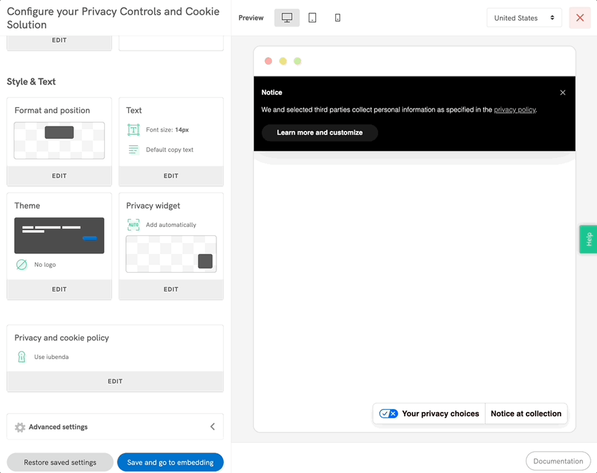
When to choose it: single-domain SaaS product with straightforward GTM setup, no custom attribution model, and no dedicated compliance resources. One-line implementation; WordPress and Shopify plugins available.
Where it falls short: Free plan limited to one language and three third-party clauses. Per-site pricing compounds for multi-product companies.
Pricing: Essentials from $5.99/month (25,000 page views, billed annually). Advanced: $24.99/month. Ultimate: $99.99/month (150,000 page views). Extra page views: $0.06 per 1,000.
4.5/5 on G2 from 50 verified reviews.
2. Usercentrics

Best for: growth-stage SaaS teams that need cookie consent flowing through GTM into GA4 and CRM without custom development.
Usercentrics merged with Copenhagen-based Cookiebot in 2021. The combined platform now processes consent across 2.4 million websites and apps in 195 countries. Fits stacks where consent needs to pass through GTM into GA4 and CRM without custom engineering.
• Interactive Advertising Bureau Transparency and Consent Framework (IAB TCF) v2.2 support and Consent Mode v2, which supports modeled conversions for non-consenting EU users.
• Banners in 35 languages with geolocation detection.
• Cross-device consent sharing reduces repeated opt-in friction across sessions.
• Data Export API pushes consent state to external systems including CRMs.
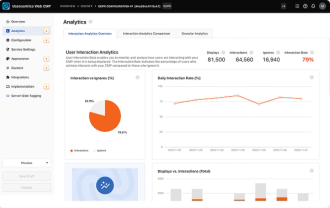
When to choose it: SaaS products already using GTM where fast compliance rollout is the priority. Cross-device consent sync strengthens attribution by reducing dropped sessions.
Where it falls short: Overwhelming settings and insufficient tutorials reported by users. No native WordPress integration. Plans auto-scale by sessions and budget surprises are possible.
Pricing: Essential from $8/month (1,500 sessions, one domain). Pro: $34/month (15,000 sessions, three domains). Business: $56/month (50,000 sessions, 10 domains).
4.8/5 from 1,451 reviews on FeaturedCustomers.
3. OneTrust

Best for: enterprise SaaS with dedicated privacy or GRC teams managing multi-jurisdictional compliance programs.
OneTrust covers cookie consent, privacy automation, third-party risk management, AI governance, and data use governance in modular form. Designed for stacks where consent is part of a broader governance and data management system.
• Scans websites against a database of 45+ million pre-categorized cookies. Consent Mode v2 certified.
• Supports 100+ global privacy frameworks and 300+ jurisdictions with real-time regulatory updates.
• Integrates with Google Ads measurement layer, Salesforce, Snowflake, Jira, ServiceNow, Okta, and Adobe Experience Manager.
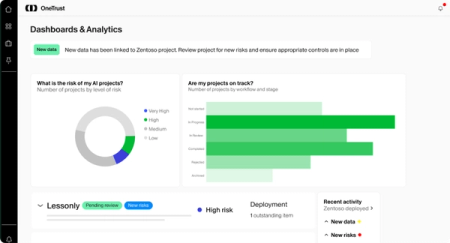
When to choose it: enterprise operations where consent feeds into broader compliance workflows including vendor risk, privacy impact assessments, and incident management. Requires dedicated resources to implement.
Where it falls short: Minimum contract raised to $10,000/year in Q2 2026. Implementation takes three to six months and requires paid consultants. Support quality scales with contract size.
Pricing: Median buyer pays approximately $11,500/year. Consent and Preference Essentials: approximately $827/month. Privacy Essentials Suite: approximately $3,680/month. Implementation fees: $10,000 to $50,000.
4.4/5 on G2 from 284 reviews. 1.5/5 on Trustpilot from 20+ reviews.
4. Didomi

Best for: global enterprises managing consent workflows across multiple markets, brands, and connected devices.
Paris-based Didomi processes over two billion consents monthly across 25+ countries. The platform handles consent across web, mobile apps, and connected TV, making it relevant for SaaS products with multi-surface user journeys.
• 99.9999% uptime and 99% consent string validity rate.
• Integrates with Google Ads measurement layer via Consent Mode v2, IAB TCF, and Microsoft UET Consent Mode.
• 45+ languages with automatic browser-based detection. Cross-device and cross-domain consent sync.
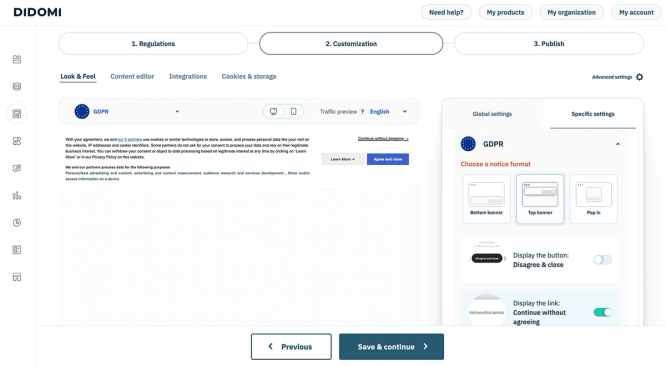
When to choose it: SaaS managing compliance simultaneously under GDPR, CCPA, Canada's CPRA, Quebec's Law 25, and Brazil's LGPD. Strongest for multi-brand or multi-region operations.
Where it falls short: No transparent pricing. All quotes require contacting sales. Learning curve despite strong implementation support.
Pricing: Custom across three tiers (Consent Essentials, Core Privacy UX, Privacy UX Plus). Contact sales for quotes based on traffic volume and domain count.
4.6/5 on G2 from 146 reviews. 4.5/5 on Capterra from 14 reviews.
5. Cookiebot by Usercentrics

Best for: small SaaS teams with single-domain cookie compliance needs and a GTM-first stack.
Now under Usercentrics, Cookiebot maintains a separate product identity focused on cookie consent. 2.4 million websites use the platform with 8.8 billion monthly user consents processed. No broader governance features, which keeps setup and cost straightforward.
• Monthly automated scanning categorizes cookies into necessary, preferences, statistics, and marketing buckets.
• Passes consent signals to GA4 via GTM. Consent Mode v2 certified. IAB TCF 2.2 support for programmatic publishers.
• 47+ languages with geolocation-based banner adaptation.
• ISO 27001 and 27701 certified. HIPAA readiness for regulated industries.
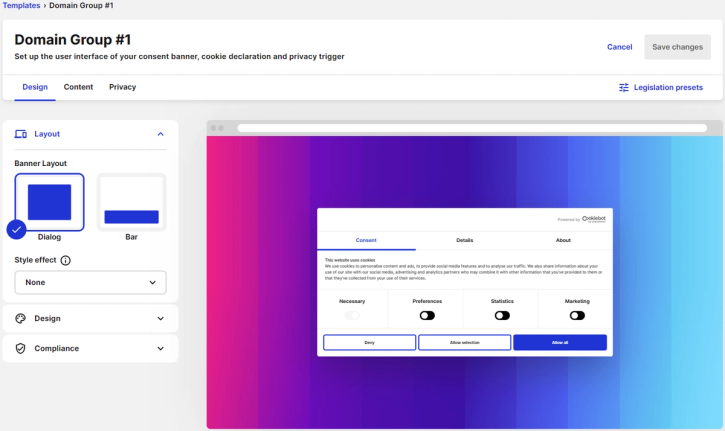
When to choose it: teams that need compliant cookie consent on a single domain in under 30 minutes. GTM already in the stack, no custom attribution setup.
Where it falls short: Base pricing doubled in August 2025 from approximately 15 EUR to 30 EUR per domain monthly. Email-only support across all plans. Plans auto-upgrade when subpage counts cross thresholds.
Pricing: Free (up to 50 subpages). Lite: $8/month. Small: $16/month (350 subpages). Medium: $34/month (3,500 subpages). Large: $56/month (7,000 subpages). Extra Large: $96/month. Each domain billed separately.
6. TrustArc
Best for: large enterprises with dedicated compliance teams managing privacy programs across multiple business units and regulatory jurisdictions.
TrustArc held the top satisfaction score in G2's Enterprise Consent Management Platform Grid for eight consecutive quarters. That is the strongest long-term retention signal in this category.
• Covers 100+ global jurisdictions with Web Content Accessibility Guidelines (WCAG) 2.2 Level AA and ADA accessibility compliance built in.
• Handles Global Privacy Control (GPC) browser signals, IAB TCF 2.2, IAB CCPA, IAB GPP, and Google Consent Mode. Integrates with Google Ads measurement layer.
• Firebase integration and AppsFlyer/Singular support extend consent to mobile attribution environments.
• Multi-domain management via one script across websites and apps.
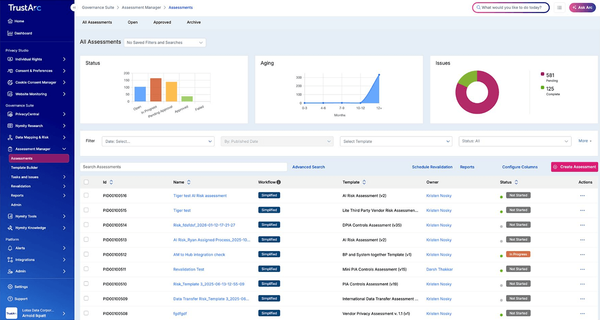
When to choose it: enterprise SaaS with high-volume data subject requests and programs spanning many domains. Dedicated Technical Account Managers from implementation through ongoing operation.
Where it falls short: Starting price: $10,000/year minimum. Actual range: $30,000 to $500,000+ annually. Implementation adds $10,000 to $50,000 upfront. Requires significant IT involvement.
Pricing: Modular, no published rates. Small deployments: $30,000 to $75,000/year. Mid-market multi-module: $100,000 to $250,000/year. Full enterprise: $250,000 to $1M+ with professional services.
4.2/5 on G2 from 321 verified reviews.
7. Axeptio

Best for: small to mid-sized SaaS businesses where consent experience is part of product UX and brand strategy.
French CMP with 130,000+ websites and apps. G2 recognized Axeptio for Best Support in 2026. Fits stacks where marketing teams need control over consent configuration without engineering dependency and where consent rates affect funnel performance.
• Native video integration in the consent banner, the first CMP to offer this format.
• No-code Consent Experience Builder for marketing team configuration without developer involvement.
• Consent Mode v2 compatible. Integrates with GA4, Piano, Amplitude, and Matomo for consent-aware analytics.
• Lightest CMP in independent performance benchmarks, preserving Core Web Vitals and Search Engine Optimization (SEO) performance.
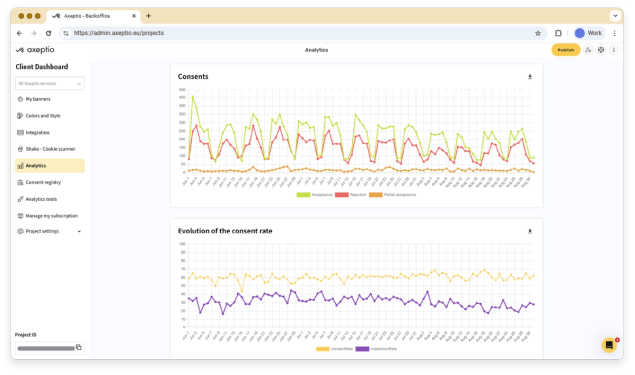
When to choose it: SaaS products where consent UI is part of the customer experience and marketing teams own the configuration. Growth-stage companies that track consent rates as a funnel metric.
Where it falls short: Free tier does not store preferences, causing persistent popups. Pricing scales sharply with traffic. Default cartoon-style interface does not fit formal industry contexts.
Pricing: Free (200 new visitors). Small: 29 EUR/month. Medium: 69 EUR/month. Large: 129 EUR/month.
4.9/5 from 61 reviews on Software Advice.
Audit your CMP, GA4 and GTM setup before your attribution data breaks.
8. Sourcepoint
Best for: publishers and enterprise SaaS with heavy ad monetization, complex vendor consent requirements, and dedicated technical resources.
Owned by Didomi, Sourcepoint operates independently with a separate pricing model. The platform targets organizations where consent management is part of an ad-tech stack. Requires technical setup and ongoing vendor management. Not suitable for teams without dedicated privacy or engineering resources.
• Diagnose tool gives global tracker visibility. Helped Haymarket reduce their vendor list from 230 to 101, cutting vendor count by 56%.
• Google-certified CMP. TCF v2.2 and multi-regulation geotargeting. Automated third-party script discovery.
• Median Interaction to Next Paint (INP) score of 6 milliseconds in performance testing with minimal page load impact.
• Unity SDK for mobile game integrations.
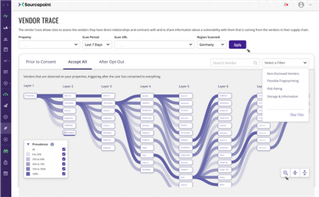
When to choose it: publisher or ad-tech-heavy SaaS needing fine-grained vendor consent control across regions.
Where it falls short: $500/month minimum locks out most SaaS teams. Implementation requires engineering support.
Pricing: Essentials: $500/month. Pro: $1,250/month (includes compliance monitoring). Enterprise: contact sales. Based on monthly page views or unique app users.
9. Piwik PRO

Best for: SaaS teams in healthcare, finance, or regulated sectors that need analytics and consent management in one governed system with full data ownership.
Piwik PRO combines Analytics, Tag Manager, Customer Data Platform (CDP), and Consent Manager in one privacy-focused platform. Consent signals flow automatically to analytics and tag management without fragile integrations between tools. The only platform in this list that captures anonymized behavioral data from non-consenting visitors.
• Health Insurance Portability and Accountability Act (HIPAA) Business Associate Agreements available. ISO 27001 and SOC 2 certified.
• Cloud, private cloud, and on-premises deployment options.
• Rawlplug reported 98 to 99% data accuracy matching accounting records, compared to 30% with Google Analytics.
• Recovers up to 4x more behavioral insights from non-consenting visitors via anonymized data capture.
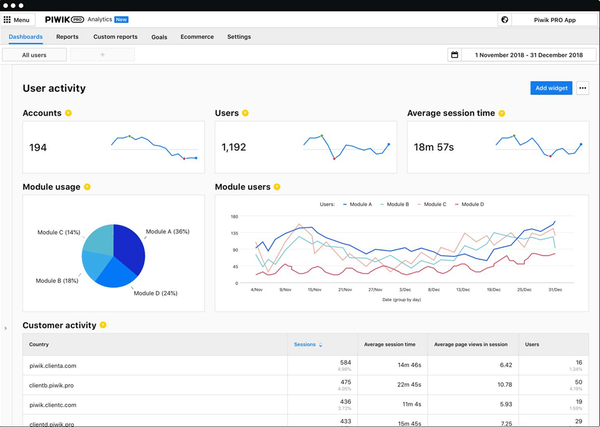
When to choose it: teams that need analytics, consent, and tag management in one governed system. Particularly relevant when data sovereignty or reporting accuracy is the primary concern.
Where it falls short: Self-hosted versions require significant technical expertise. Ecommerce module limited versus specialized platforms.
Pricing: Business from 35 EUR/month (2M monthly actions, 25-month retention, EU hosting in Sweden). Enterprise from 366 EUR/month. 30-day trial, no credit card required.
4.6/5 on G2 and 4.6/5 on GetApp from 21 reviews.
"Consent Mode v2 is not just a compliance requirement. It is a measurement requirement. If your CMP does not implement it correctly, you are flying blind on a significant portion of your traffic." – Julius Fedorovicius, Founder, Analytics Mania | Google Analytics and Tag Manager Specialist
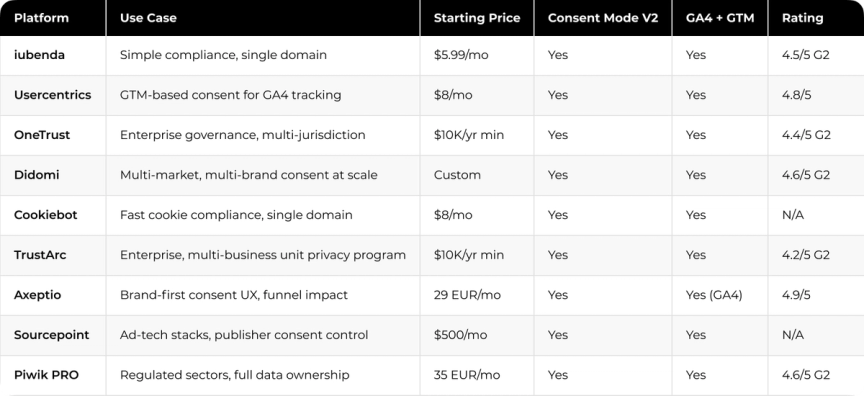
Platform Comparison: Which CMP Fits Your Stack
This table maps each platform to the stack type and use case it serves best. Use it as a starting filter before evaluating pricing and integration depth.
Your stack is mapped. Now make sure your consent layer matches it.
Which CMP Should You Choose for Your SaaS Stack
The right CMP depends on your stack requirements and how much control you need over consent signals. Match your current setup, not the features you might need in two years.
Small SaaS: single product, one domain, under 50K monthly visitors
Iubenda or Cookiebot. Both implement in under 30 minutes, support Consent Mode v2, and require no dedicated compliance resources. Iubenda includes privacy policy generation alongside cookie consent. Cookiebot focuses on cookie compliance with strong GTM compatibility.
Growth-Stage SaaS: GA4-Dependent, CRM Integrations, Scaling to Multiple Regions
Usercentrics or Axeptio. Both pass consent state through GTM into GA4. Axeptio fits when consent UX is a funnel metric and marketing teams own the configuration. Usercentrics fits when cross-device consent sync and CRM data export matter for attribution.
Enterprise SaaS: Multi-Jurisdiction, Dedicated Compliance Team, Complex Vendor Ecosystem
OneTrust, Didomi, or TrustArc. OneTrust has the broadest module coverage including AI governance. Didomi handles multi-brand and multi-surface consent at scale. TrustArc has the highest long-term customer satisfaction in the enterprise segment.
Analytics-First or Regulated SaaS: Data Ownership, HIPAA, Reporting Accuracy
Piwik PRO. Consent, analytics, tag management, and CDP in one governed system. The only platform that captures anonymized behavioral data from non-consenting visitors without violating privacy requirements.
Publisher or ad-tech-heavy SaaS
Sourcepoint. Built for complex vendor consent across ad-tech stacks with the granularity that programmatic publishing requires.
How Darwin Helps SaaS Teams Get Consent Configuration Right
These issues usually appear after implementation, when reporting and attribution start to break. A team runs a CMP for months before realizing GA4 is missing 30% of sessions, attribution gaps are growing, or CRM segments include contacts that never consented to email outreach.
Darwin works with B2B SaaS marketing teams on the full measurement setup: auditing what is blocking accurate tracking, resolving consent signal conflicts, and connecting consent state to GA4, GTM, and CRM in a way that holds.
Wizehire, an HR tech SaaS, came to Darwin with paid campaigns running across multiple channels and no reliable way to see which ones were working. After cleaning the tracking layer and expanding tracked conversion events from four to nine, cost per lead dropped 26% and funnel volume grew 60% within four months.
If your team is spending more time preparing reports than acting on them, that is the gap worth closing first. Tool selection defines how consent works.
Configuration defines whether your data in GA4, GTM, and CRM remains usable.
Consent configuration that preserves your GA4 and attribution data is an engineering decision. Darwin handles it.
FAQ
Q1. What is a consent management platform and why do SaaS companies need one?
A CMP collects, stores, and signals user consent for cookies and data processing. SaaS companies need one to comply with GDPR, CCPA, and other privacy laws and to ensure that consent state is passed correctly to GA4, GTM, and CRM systems. A misconfigured CMP creates measurement gaps that distort attribution and budget decisions.
Q2. How does CMP configuration affect GA4 data quality?
When Consent Mode v2 is not correctly implemented, GA4 stops receiving events from users who decline tracking. Google's conversion modeling can partially recover this signal, but only when consent state is passed through the CMP. Without it, non-consenting sessions disappear from reports and channel performance data becomes incomplete.
Q3. What is Google Consent Mode v2 and which CMPs support it?
Consent Mode v2 is Google's framework that adjusts tag behavior based on user consent state. It has been required for Google Ads and Analytics in the EU since March 2024. All nine platforms reviewed in this guide support Consent Mode v2. The difference lies in how cleanly each implements it through GTM and whether server-side sync is available.
Q4. Can one CMP cover multiple domains or SaaS subdomains?
Most platforms price per domain. Usercentrics Pro covers three domains; its Business plan covers 10. Didomi, OneTrust, and TrustArc include multi-domain management in enterprise contracts. Cookiebot and iubenda require separate subscriptions per domain, so costs compound for multi-product SaaS companies.
Q5. How long does CMP implementation take?
Implementation ranges from under 30 minutes for Cookiebot or iubenda via GTM, to three to six months for OneTrust or TrustArc in enterprise environments. Usercentrics and Axeptio take a few hours of GTM configuration for most setups. Piwik PRO requires additional time if self-hosted deployment is chosen.
 Sergey Kisly